Author’s Note: This piece was published over a decade ago and I think the strength of it is the reminder that each kid has a story.
Two years ago I taught a “Strategic” 10th grade English class. “Strategic” is the No Child Left Behind term for students far below basic. Before that it was called “Sheltered.” A hundred different schools have a hundred different names for it, but to the students, there is only one. It is the dumb class. No matter how we dress it up, or try to pretend otherwise, the students know which classes the dumb classes are, and label them accordingly.
This class was amazing. It was amazing what these kids had to go through every day of their lives just to get to my class in the morning. It was also amazing because it was one of the best experiences of my life.
Have you seen the new movie Precious? I had a Precious in my class. She looked just like her, and shared many of the same problems. Early in the year, her twin three-year old cousins were caught in a drive-by shooting. As the week went by, she got worse and worse just like the twin girls in the hospital. They didn’t make it. Precious didn’t do any homework that week, or the ones immediately following.
Another girl, we’ll call her Jessica, failed my class for 7 months. Failed. She never did homework, and when I found out why, I couldn’t say I blamed her. I won’t go into it, but let’s just say if you were her you wouldn’t be doing any homework either. She was a lost cause — or so I thought. The final quarter, she got a B in my class. Sometimes I think that B is the grade I am most proud of during my time as a teacher.
I had this black student, we’ll call him Andre. I was amazed at how easily he could analyze Shakespeare. One day he walked into my class and asked for his homework for the week, he was being suspended. When I asked him why he said, “I choked Mr. X in third period.” When I looked into his transcript, I found he was failing every class but mine. In my class he had an A. Andre took a bus from Oakland every day, and returned there late at night to a ghetto worse than anything most of us can imagine. He too had a tough time getting all his homework done.
Then there was Pablo. He was a Sureno (a Mexican gang in California known for wearing blue). His brothers were all Surenos, and his father was a Sureno. He had a hard time finding a quiet place to work at home. Pablo rarely did his homework.
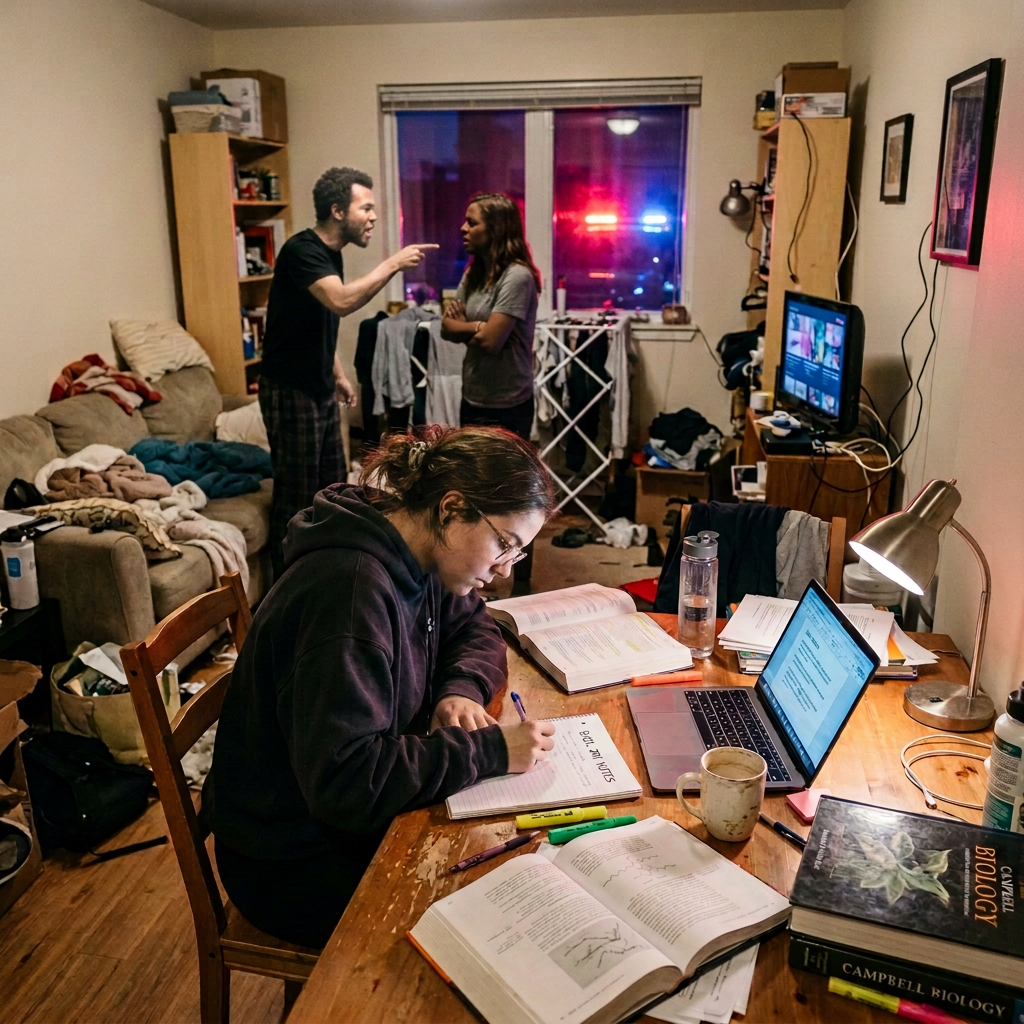
The thing about homework is we assume they have a home to work in.
It took me a few months to learn all their stories. Remember, there were over 25 kids in that class, and everyone had a similar tale to tell. I’ve just given you a few.
As the months passed, their grades started to do what they always do in a Strategic class. Half the class had a D or an F. A lot had Cs. There were a few Bs and maybe 2 As. I compared these grades to the other teachers teaching Strategic and found the same problem. These kids were doing the same thing they had been doing for years in school. They were failing.
I like to say that teachers need to work just as hard as the students when it comes to grades. I take their grades personally, and I spend quite a bit of time after school looking for patterns, and figuring out who I need to talk to the next day to get back on track. I think about what I need to do better as an instructor to raise them up. Of course, looking at their grades, it was obvious what the biggest problem was. Eventually, I had to come face to face with what was really bothering me, and I had to ask myself: Can I even give homework in good conscience?
I knew their stories by then. I knew what it was they faced when they got home every day — or group home, for some of them. And I had to put myself in their shoes. Would I be getting my homework done every night if I was leading their lives?
Hell no.
Now I know all the arguments. When we don’t give homework, we are dumbing them down. We are lowering expectations. We are contributing to a system that expects less and less from these kids. We are too easy on them already, and it is just as much our fault as theirs that they are so lazy.
Whatever. The only people who say that are people who never grew up in the ghetto. I know I say that a lot, but there are just too many people out there who refuse to acknowledge what these kids are going through. It is a Republican mentality. It’s like something out of an Ayn Rand novel. Rich people like to take credit for things they were born with, and won’t admit how difficult things are for people who are born with nothing.
So I stopped giving homework — but my expectations were as high as ever. I made a deal with them that they didn’t have to do homework as long as they worked harder in class. They agreed (of course). But right around that time I took them to tour San Francisco State University. I knew damn well there was maybe one girl in that class that even had a prayer of getting into college. The kids even wondered why I was taking them, but we went anyway. Most of them had never been to San Francisco. You should have seen the looks on their faces. I remember a conversation I had with Andre while our tour guide showed us around.
“Mr. Amaral, where all the security at?” Andre asked me, looking around suspiciously.
“They’re around somewhere, but there aren’t too many of them. We probably won’t even see one.” I replied.
“Well what happen if someone get in a fight?” he asked me. He was worried.
“The kids here don’t get in fights, Andre.” I told him, smiling sadly. “They’re all here just to learn. They don’t worry about any of that stuff. Look around, don’t you see?”
“Yeah, but what if they was one?”
“But Andre, there wouldn’t be one. There aren’t any fights here.”
“Yeah, but let’s just say it happen. Who gonna stop it?”
I took a deep breath, and went into a speech about college culture, and how serious most students are, and even if they aren’t, how everyone is just a little bit older, and a little more mature, and things aren’t ghetto in college. You don’t have to worry about any of that stuff here, the schools are safe, the bathrooms are clean, and there aren’t any gangs, life is just better.
Andre took his time — thought about what I had said. He looked puzzled, like he couldn’t decide on some elusive idea floating around in his head. Finally he looked up at me and said, “But, when it does happen, what do you think they do?”
So we toured the campus, and the kids had a great time. I was the only teacher at my high school who took a Strategic class to a college campus that year, or any year I would bet. Just because I stopped giving homework didn’t mean my expectations were any lower. I still demanded the world out of these kids, but I demanded it only where I felt it was fair to expect it out of them. I demanded they work their tails off in the one place they were safe to do so: My classroom.
Of course, this happened in the real world, so not much changed. There aren’t many happy endings in these classes. Most of the grades improved a little bit, but it wasn’t much. The kids with Fs were still failing. Some kids got a break when grades came around, and maybe it helped them get to a C from a D. Then there was Jessica’s success story, where she turned it around completely — she was probably the only one. I can’t remember. It wasn’t like we were in a movie all of a sudden and all of them got into San Francisco State in the end. Things were just a little better. Their grades were a little better, but more importantly, they didn’t feel the unfair policies of education pressing down on them as severely as in the past. They knew it was unfair to expect to be able to study when you don’t have a room to go study in, and your dad is weighing out weed on the kitchen table. They were just wondering when someone else in the adult world would acknowledge it.
It was just one strategy I used to improve my job — they trusted me a little bit more, I got more buy-in during class time, and they were willing to work harder in class when they knew there wouldn’t be work outside of it.
I think that with some of these classes, whether they are called Strategic, Sheltered, or whatever label the people at the District Office are paid to come up with, we need to think long and hard about our homework policies. Maybe you’ll decide you feel the same way I do — that you can’t give them homework in good conscience. It works for me in some classes (not all, mind you), maybe it will work for you. Just make sure that your expectations don’t falter when you make these concessions. Continue to expect the world out of them, as long as what you expect is possible in their world.
In the end, it won’t change too much. It never does. We teach in the real world. These classes are a work of art, and you have to use many techniques to create your masterpiece. That 10th grade Strategic class may not have been a masterpiece, but it is something I can look back on with a little bit of pride. I still see those kids now and then, and for some of them, I feel like I was a big reason they even made it to 11th grade. And a few days ago, I wrote a letter of recommendation for the one girl from that class who did make it to college — it was to help her receive a scholarship from an African-American grant organization.
So think about your homework policy, but don’t lower your expectations if you decide to go the same route as me.
And take them to see a college campus, if for no other reason than it might be the first school they’ve been to where the students aren’t scared.
Recommend this article to a friend.


Leave a Reply